

 English
  Español
  Italiano
  Deutsch
  Nederlands
  Português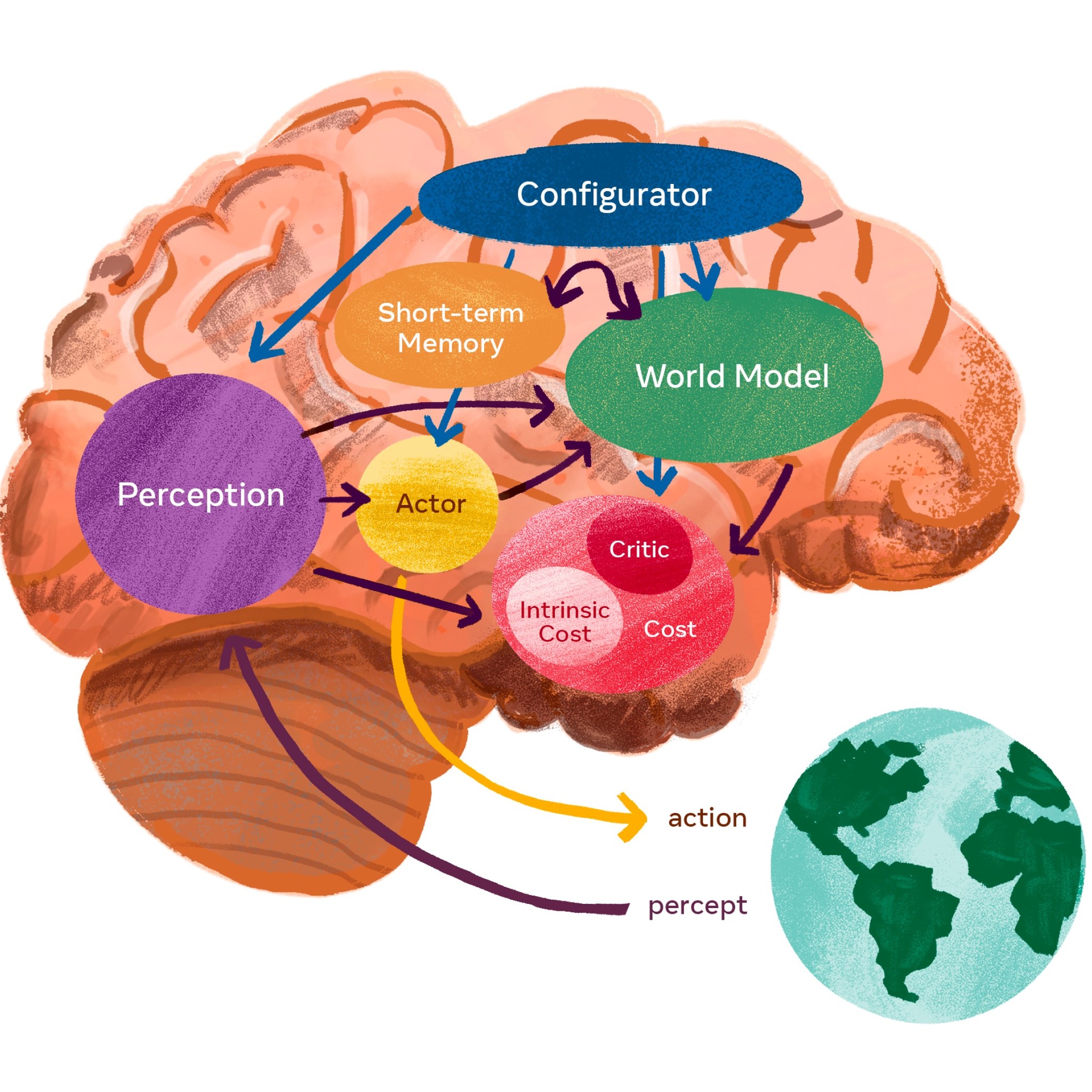
L’intelligence artificielle (IA) évolue vers des systèmes capables non seulement de traiter des données, mais aussi de comprendre et anticiper les dynamiques du monde réel. Parmi les avancées les plus prometteuses figurent les world models, des modèles conçus pour simuler des environnements complexes et interagir avec eux de manière autonome. Contrairement aux Large Language Models (LLMs), qui dominent aujourd’hui le paysage de l’IA générative, les world models adoptent une approche plus proche de la cognition humaine, intégrant des notions de causalité, de temps et d’espace.
Dans cet article, nous explorons en détail ce que sont les world models, leurs différences fondamentales avec les LLMs, et les acteurs majeurs qui les développent, comme Yann LeCun et son équipe au sein d’AMI Labs.
À retenir sur les world models
- Les world models sont des systèmes d’IA capables de simuler des scénarios dynamiques et d’anticiper les conséquences des actions.
- Ils se distinguent des LLMs par leur capacité à modéliser des relations causales et temporelles, au-delà du simple traitement du langage.
- Des acteurs comme Yann LeCun (AMI Labs), Meta, et des laboratoires de recherche travaillent sur ces modèles pour améliorer l’autonomie des machines.
- Leurs applications incluent la robotique autonome, la conduite autonome, et l’optimisation de décisions en temps réel.
- Les world models ne remplaceront pas les LLMs, mais les compléteront pour des tâches nécessitant une compréhension approfondie du monde.
- Leur développement repose sur des réseaux de neurones avancés et des techniques d’apprentissage par renforcement.
Qu’est-ce qu’un world model ?
Définition et principes de base
Un world model (ou "modèle de monde") est un système d’IA conçu pour représenter et simuler les dynamiques du monde réel. Contrairement aux modèles traditionnels, qui se contentent de traiter des données statiques, les world models intègrent des mécanismes de causalité, de temporalité et d’interaction avec l’environnement. Leur objectif ? Permettre aux machines de prédire les conséquences de leurs actions et d’adapter leur comportement en conséquence.
Par exemple, un world model pourrait simuler le comportement d’un robot dans un entrepôt, en anticipant les obstacles, les interactions avec les humains, ou les changements de configuration des lieux. Cette capacité à modéliser des scénarios complexes en fait un outil clé pour des applications comme la robotique autonome ou la conduite autonome.
Origines et inspirations théoriques
L’idée des world models n’est pas nouvelle. Elle s’inspire de travaux en neurosciences et en psychologie cognitive, qui suggèrent que le cerveau humain fonctionne comme un simulateur interne pour anticiper les événements. En IA, cette approche a été popularisée par des chercheurs comme Yann LeCun, qui plaide pour des systèmes capables de raisonner de manière causale, plutôt que de se limiter à des corrélations statistiques.
Les premiers modèles de ce type ont émergé dans les années 2010, avec des applications en apprentissage par renforcement (reinforcement learning). Aujourd’hui, ils sont au cœur des recherches sur l’IA générale (AGI), qui vise à créer des machines dotées d’une intelligence proche de celle des humains.
World models vs LLMs : quelles différences ?
1. Approche statique vs dynamique
Les Large Language Models (LLMs), comme GPT-4 ou Llama, sont conçus pour générer du texte à partir de vastes corpus de données. Leur force réside dans leur capacité à comprendre et produire du langage naturel, mais ils restent limités à une approche statique : ils ne modélisent pas les interactions avec le monde réel, ni les conséquences temporelles des actions.
À l’inverse, les world models adoptent une approche dynamique. Ils simulent des scénarios interactifs, où chaque action peut avoir des répercussions sur l’environnement. Par exemple, un world model pourrait prédire que "ouvrir une porte" entraîne un changement dans la configuration d’une pièce, alors qu’un LLM se contenterait de décrire l’action sans en comprendre les implications.
2. Compréhension causale vs corrélations statistiques
Les LLMs excellent dans la détection de motifs (patterns) dans les données, mais ils ne comprennent pas les relations causales. Par exemple, un LLM peut associer "pluie" et "parapluie" sans saisir que la pluie cause le besoin d’un parapluie.
Les world models, en revanche, intègrent des mécanismes de causalité. Ils peuvent modéliser des chaînes d’événements, comme : "Si je tourne le volant à gauche, la voiture changera de direction". Cette capacité est essentielle pour des applications comme la robotique ou les systèmes autonomes.
3. Applications : langage vs interaction avec le monde
Les LLMs sont optimisés pour des tâches liées au langage : rédaction, traduction, chatbots, etc. Leur domaine d’application est vaste, mais ils ne peuvent pas interagir physiquement avec le monde.
Les world models, eux, sont conçus pour des environnements interactifs :
- Robotique autonome : un robot équipé d’un world model peut naviguer dans un espace inconnu en anticipant les obstacles.
- Conduite autonome : un véhicule peut simuler différents scénarios de circulation pour prendre des décisions en temps réel.
- Jeux vidéo : un agent IA peut adapter sa stratégie en fonction des actions du joueur.
- Simulation de scénarios complexes : en logistique, un world model peut optimiser les trajets en fonction des contraintes dynamiques (trafic, météo, etc.).
Les acteurs clés du développement des world models
1. Yann LeCun et AMI Labs : une vision causale de l’IA
Yann LeCun, pionnier de l’apprentissage profond et lauréat du Prix Turing, est l’un des principaux défenseurs des world models. Au sein d’AMI Labs (AI & Machine Intelligence Labs, une division de Meta), il travaille sur des systèmes capables de raisonner de manière causale, une étape cruciale pour dépasser les limites des LLMs.
LeCun critique ouvertement les LLMs pour leur manque de compréhension du monde réel. Selon lui, ces modèles sont "aveugles" aux relations causales et aux dynamiques temporelles. Ses recherches visent à développer des architectures hybrides, combinant des world models avec des techniques d’apprentissage par renforcement pour créer des systèmes plus autonomes.
2. Meta et l’IA générale (AGI)
Meta (anciennement Facebook) est l’un des acteurs les plus actifs dans le développement des world models. L’entreprise investit massivement dans des projets comme Ego4D, qui vise à créer des modèles capables de comprendre les interactions humaines à partir de vidéos en première personne. Ces travaux s’inscrivent dans une vision plus large de l’IA générale (AGI), où les machines pourraient accomplir des tâches variées avec une autonomie proche de celle des humains.
3. Autres laboratoires et entreprises
Plusieurs autres acteurs explorent les world models :
- DeepMind (Google) : travaille sur des modèles comme MuZero, capable de maîtriser des jeux complexes (échecs, Go, Atari) en simulant des scénarios.
- NVIDIA : développe des outils pour la simulation de mondes virtuels, utilisés en robotique et en conduite autonome.
- Universités et laboratoires : des institutions comme le MIT ou Stanford publient régulièrement des recherches sur les world models, notamment pour des applications en santé ou en logistique.
Cas d’usage concrets des world models
1. Robotique autonome
Les robots équipés de world models peuvent naviguer dans des environnements inconnus en anticipant les obstacles et en adaptant leur trajectoire. Par exemple, un robot livreur pourrait simuler différents itinéraires en fonction du trafic ou des conditions météo, pour optimiser ses déplacements.
2. Conduite autonome
Les véhicules autonomes utilisent déjà des modèles prédictifs, mais les world models pourraient aller plus loin en simulant des scénarios complexes, comme :
- Un piéton traversant soudainement la route.
- Un changement de voie en cas d’accident devant le véhicule.
- Des conditions météorologiques extrêmes (neige, brouillard).
3. Simulation de scénarios industriels
Dans l’industrie, les world models permettent de tester des configurations avant leur mise en œuvre réelle. Par exemple :
- Optimiser la logistique d’un entrepôt en simulant les flux de marchandises.
- Prévoir les pannes d’équipements en modélisant leur usure.
- Améliorer la sécurité des travailleurs en simulant des situations à risque.
4. Jeux vidéo et réalité virtuelle
Les world models sont également utilisés pour créer des agents IA plus réalistes dans les jeux vidéo. Par exemple, un ennemi contrôlé par un world model pourrait adapter sa stratégie en fonction des actions du joueur, rendant l’expérience plus immersive.
Limites et défis des world models
1. Complexité computationnelle
Simuler des scénarios dynamiques et interactifs nécessite une puissance de calcul colossale. Les world models actuels sont souvent limités à des environnements simplifiés, et leur généralisation à des situations réelles reste un défi majeur.
2. Collecte de données
Contrairement aux LLMs, qui peuvent s’entraîner sur des textes disponibles en ligne, les world models ont besoin de données interactives (vidéos, simulations, capteurs). La collecte et l’annotation de ces données représentent un coût et une complexité supplémentaires.
3. Éthique et biais
Comme tout système d’IA, les world models peuvent reproduire des biais présents dans leurs données d’entraînement. Par exemple, un modèle simulant des interactions sociales pourrait perpétuer des stéréotypes si les données ne sont pas diversifiées. De plus, leur capacité à anticiper les actions humaines soulève des questions éthiques, notamment en matière de vie privée.
4. Intégration avec les LLMs
Bien que les world models et les LLMs soient complémentaires, leur intégration reste un défi technique. Par exemple, comment faire en sorte qu’un système combine la compréhension du langage (LLM) avec la simulation de scénarios (world model) pour répondre à des requêtes complexes ?
FAQ : tout savoir sur les world models
Qu’est-ce qu’un world model en intelligence artificielle ?
Un world model est un système d’IA conçu pour simuler et comprendre les dynamiques du monde réel. Il intègre des représentations causales et temporelles pour anticiper les conséquences des actions, contrairement aux LLMs qui se limitent au traitement du langage.
En quoi les world models diffèrent-ils des LLMs ?
Les LLMs génèrent du texte à partir de données statiques, tandis que les world models modélisent des scénarios dynamiques et interactifs. Par exemple, un world model peut prédire que "tourner le volant à gauche" fera dévier la voiture, alors qu’un LLM se contenterait de décrire l’action.
Qui développe les world models aujourd’hui ?
Des acteurs comme Yann LeCun (AMI Labs), Meta, DeepMind (Google), et NVIDIA travaillent sur les world models. Ces modèles sont au cœur des recherches sur l’IA générale (AGI).
Quels sont les cas d’usage des world models ?
Ils sont utilisés pour :
- La robotique autonome (navigation, manipulation d’objets).
- La conduite autonome (simulation de scénarios de circulation).
- La simulation industrielle (optimisation de la logistique, prévention des pannes).
- Les jeux vidéo (agents IA plus réalistes).
Les world models remplaceront-ils les LLMs ?
Non, les deux approches sont complémentaires. Les LLMs excellent dans le traitement du langage, tandis que les world models visent une compréhension plus large et interactive du monde. À l’avenir, on peut imaginer des systèmes hybrides combinant les deux technologies.
Quels sont les défis des world models ?
Les principaux défis incluent :
- La complexité computationnelle (besoin de puissance de calcul élevée).
- La collecte de données interactives (vidéos, simulations).
- Les questions éthiques (biais, vie privée).
- L’intégration avec les LLMs pour des systèmes plus complets.